CASE STUDY 02/ COLLECTIBLES MARKETPLACE
CASE STUDY 02/ COLLECTIBLES MARKETPLACE
Collectivault
Collectors buy for the story behind an item: who wore it, and what it meant to them. But in more than forty interviews, they told us they will not spend their money without proof it is real. So I designed a marketplace that shows the proof at every step, and gives ordinary fans a fair way in.
Collectors buy for the story behind an item: who wore it, and what it meant to them. But in more than forty interviews, they told us they will not spend their money without proof it is real. So I designed a marketplace that shows the proof at every step, and gives ordinary fans a fair way in.

ROLE
Product Designer
TEAM
Capstone team of five, then solo
TIMELINE
Late 2025, then Mar to Aug 2026
SKILLS
User research, User flows, Wireframing, Design system
ROLE
Product Designer
TEAM
Capstone team of five, then solo
TIMELINE
Late 2025, then Mar to Aug 2026
SKILLS
User research, User flows, Wireframing, Design system
ROLE
Product Designer
TEAM
Capstone team of five, then solo
TIMELINE
Late 2025, then Mar to Aug 2026
SKILLS
User research, User flows, Wireframing, Design system
40+
Fans, collectors, and investing experts interviewed on why they buy
40+
Fans, collectors, and investing experts interviewed on why they buy
40+
Fans, collectors, and investing experts interviewed on why they buy
9
User flows ready for developers to build
9
User flows ready for developers to build
9
User flows ready for developers to build
6
Sprints to deliver them, with a full design system
6
Sprints to deliver them, with a full design system
6
Sprints to deliver them, with a full design system
SELECTED SCREENS
SELECTED SCREENS





THE PROBLEM
THE PROBLEM
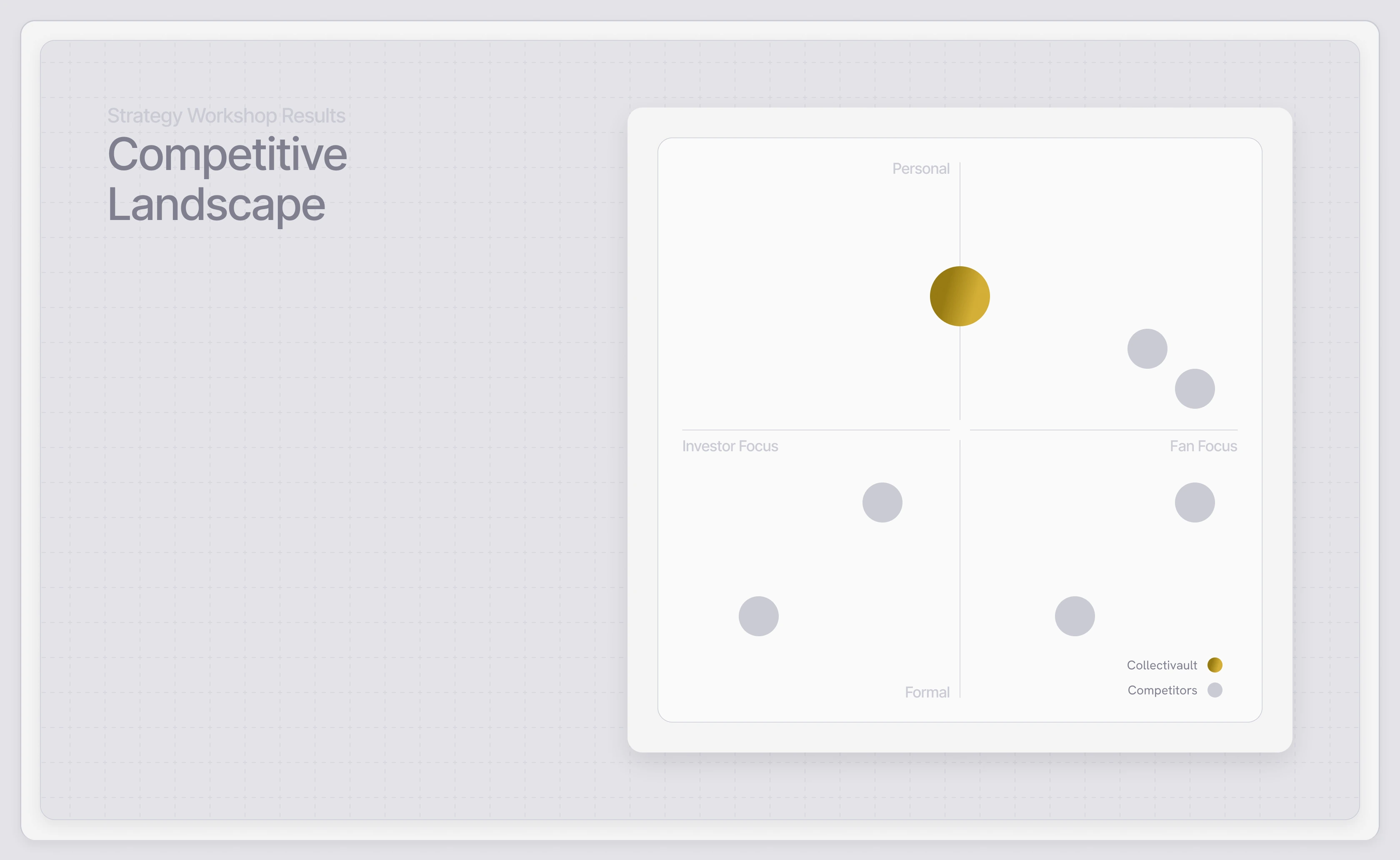
Sports memorabilia is sold in two very different places. Auction houses serve investors and can feel closed to everyone else, while open marketplaces are flooded with fakes.
I led the capstone research: more than forty interviews, with everyone from die-hard fans to investing experts. They told us they buy for sentiment and connection, but will not spend their money without proof an item is real. So the task was a marketplace that feels personal and earns trust at the same time.
Three motivations came out of the research, which my team and I turned into three pillars: trust, access, and connection. After that, every feature had to serve at least one of the three.
Trust
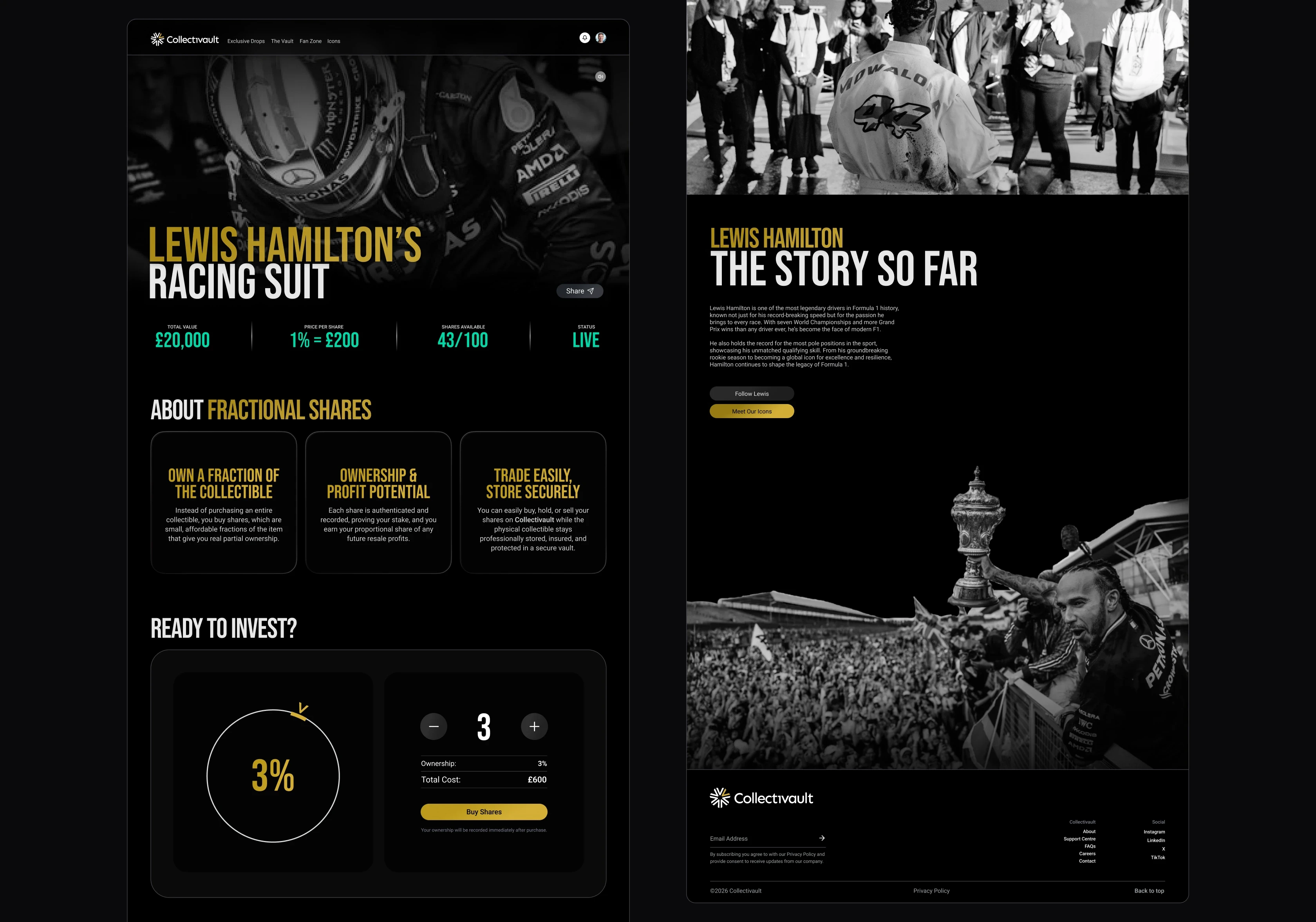
Every item is verified by a third party and its provenance published, so the proof never comes from the seller.
Access
Fractional ownership lets someone own part of a high-value item within their means, so investors stop being the only people who can buy. Popcorn bidding does the same job at the other end: it extends the clock by 30 minutes when a late bid lands, so a wealthy sniper cannot take the last second from an ordinary fan.
Connection
The 4-Day Exclusive Drop reveals an item through daily clues before bidding opens, which turns a transaction into a story.
Watch the walkthrough: I narrate one drop from start to finish, through the Watch List, four days of clues, the three-step profile, and popcorn bidding.
Watch the walkthrough: I narrate one drop from start to finish, through the Watch List, four days of clues, the three-step profile, and popcorn bidding.
The onboarding trade-off
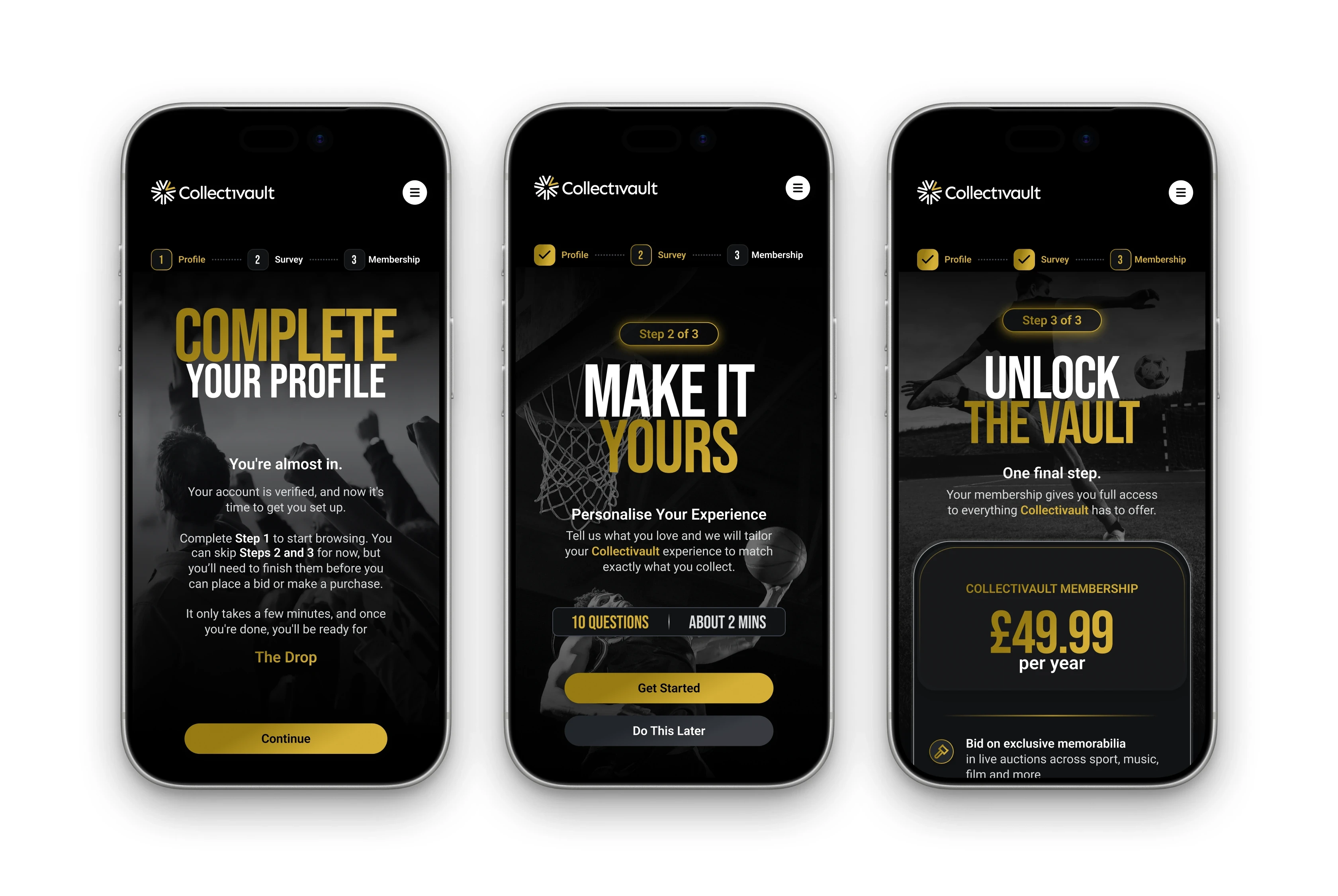
The original brief asked every new member for a lot of information before they could join an Exclusive Drop. My instinct was to push back, because every compulsory question is a reason to leave. But the founders had good reasons: regulation, and wanting to understand who their collectors were. It was a real tension between making it easy to join and knowing your customer.
“The client needed the data. I cut the list to ten questions, split them into three short steps you can complete in any order, and left people free to enjoy the drop itself until the moment they choose to bid.”
You can browse, follow a drop, and join the Watch List freely. You only need to complete the three steps when you decide to bid, and the interface tells you so at that moment, not on the way in. Someone seconds from bidding on the gloves they watched their father cheer for will finish ten questions without hesitation. Someone who is just curious is never asked to. The friction is still there, because the business needs it, but it now falls on the fans ready to invest, not on everyone who walks through the door.
THE ALTERNATIVE I REJECTED
THE ALTERNATIVE I REJECTED

Rejected: one long form, up front
The same data collected, without asking for it at the door.
Chosen: three steps, bid-gated
Rejected: one long form, up front
The same data collected, without asking for it at the door.
Chosen: three steps, bid-gated
CONCLUSION
CONCLUSION
What I learned
I was sure the choice was to push back or to do as I was asked. It was neither. The answer was to move the friction to the moment people most want to go through with it. Now I look for that middle way before I argue for either side. I also learned to decide how to measure a flow while I design it. I made a confident case for the three-step gate, but never said what would show it was working. A decision nobody can check is only an opinion with a wireframe attached.
Next steps
Moving the questions to the moment of bidding makes sense in principle, but it has not been measured yet, because my contract ended at handover. My advice to the developers was to test it with real users before launch, and to track three things: how many people complete each step, how many go on to bid, and where in the three steps people stop.