CASE STUDY 01/ AI RESEARCH TOOL
CASE STUDY 01/ AI RESEARCH TOOL
Paper2Sim
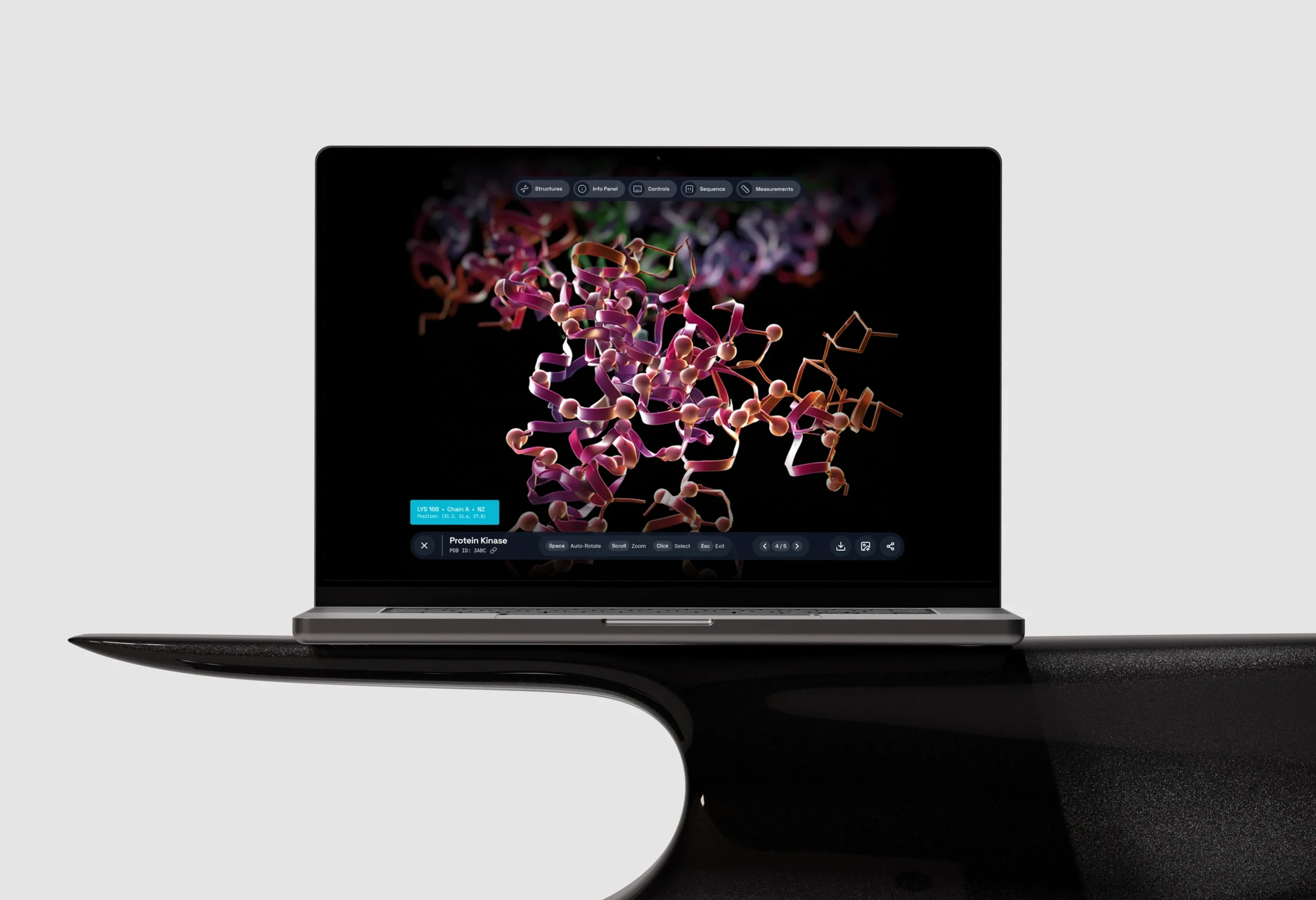
A molecular biologist can spend 3 to 4 hours on a single research paper. Paper2Sim promised minutes, but every researcher I interviewed distrusted AI, many after being caught out by invented references. So I put every step on screen, and let them check the answer before they rely on it.
A molecular biologist can spend 3 to 4 hours on a single research paper. Paper2Sim promised minutes, but every researcher I interviewed distrusted AI, many after being caught out by invented references. So I put every step on screen, and let them check the answer before they rely on it.
ROLE
Product Designer
TEAM
Solo contract
TIMELINE
Dec 2025 to Mar 2026
SKILLS
User research, Interaction design, Usability testing, Engineering handover
ROLE
Product Designer
TEAM
Solo contract
TIMELINE
Dec 2025 to Mar 2026
SKILLS
User research, Interaction design, Usability testing, Engineering handover
ROLE
Product Designer
TEAM
Solo contract
TIMELINE
Dec 2025 to Mar 2026
SKILLS
User research, Interaction design, Usability testing, Engineering handover
7
Researchers interviewed in 4 countries, all wary of AI tools
7
Researchers interviewed in 4 countries, all wary of AI tools
7
Researchers interviewed in 4 countries, all wary of AI tools
0
Instructions needed to complete the six-stage workflow
0
Instructions needed to complete the six-stage workflow
0
Instructions needed to complete the six-stage workflow
4/4
Testers welcomed both checkpoints where they confirm the results
4/4
Testers welcomed both checkpoints where they confirm the results
4/4
Testers welcomed both checkpoints where they confirm the results
SELECTED SCREENS
SELECTED SCREENS






THE PROBLEM
THE PROBLEM
For a molecular biologist, one research paper can mean 3 to 4 hours of work: reading it closely, pulling out the protein structures and the claims, then switching between the PDF, a structure database, and 3D software to check them. Paper2Sim’s technology promised to cut that to 10 or 15 minutes. What was missing was any reason to believe it.
Every researcher I interviewed distrusted AI tools, often after being caught out by invented references or citation links that led nowhere. Speed was solved. Trust was not.
KEY FINDING
Seven researchers, one worry: could they trust the answer?
I interviewed seven researchers across the UK, the USA, Thailand, and Sri Lanka, from a PhD student working on drug targets to senior scientists with twenty years behind them. Every one of them raised the same worry.
Their names go on everything they publish, so none of them would stake a paper on a tool they could not check.
Watch the walkthrough: I narrate a paper going through extraction with every stage on screen, the two checkpoints, and the results page.
Watch the walkthrough: I narrate a paper going through extraction with every stage on screen, the two checkpoints, and the results page.
A visible wait beats a hidden one
The easy option was a single progress bar. I decided against it, and showed every stage of the workflow as it happened. Showing every stage makes the slow ones visible, and I accepted that cost knowingly. A researcher who can watch each stage will wait for it; one handed a black box goes back to doing the job by hand. It is Nielsen’s first usability heuristic, visibility of system status, applied to the most sceptical audience there is.
“I chose to show every processing step, even knowing some steps would be slow enough to feel tedious. Researchers do not trust a black box, however fast. Showing each step was worth more than a smooth wait.”
Two checkpoints where the user stays in control
I added two quality checkpoints, one after the data is extracted and one after the claims are checked, where the researcher reviews the results and confirms them before moving on. This is friction I added on purpose.
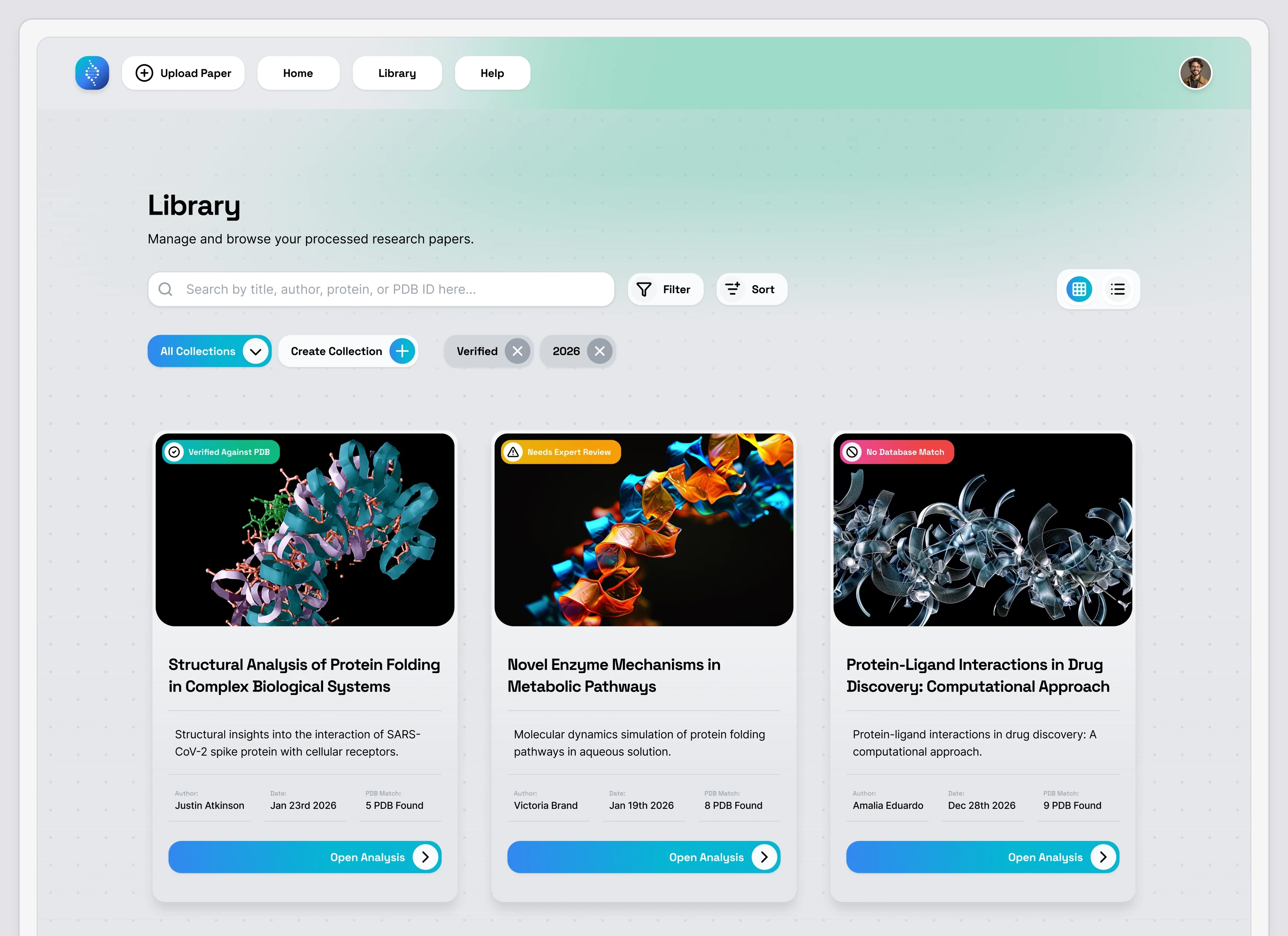
In research, an error can become a citation, and a citation can become a retracted paper, so a moment of deliberate human confirmation is worth having. In testing, all four participants welcomed both checkpoints. The same thinking renamed the interface itself: ‘Verified’ became ‘Verified Against PDB’, naming the protein database it was checked against, because the right words are the first line of trust.
THE ALTERNATIVE I REJECTED
THE ALTERNATIVE I REJECTED

Rejected: fast, opaque
The rejected version is the one most tools ship.
Chosen: slower, believed
Rejected: fast, opaque
The rejected version is the one most tools ship.
Chosen: slower, believed
CONCLUSION
CONCLUSION
Four moderated remote sessions in February 2026, 30 minutes each, with participants thinking aloud as they went. Three were practising scientists; one was a UX designer giving an expert review. The interface needed no instructions. Nobody was walked through the workflow, and nobody asked to be. For a six-stage process with two checkpoints, shown to scientists already let down by AI tools, that is the result I would point to first. No tester asked for a checkpoint to be removed, and the sessions produced five specific design changes, which I carried into the final designs.
Four moderated remote sessions in February 2026, 30 minutes each, with participants thinking aloud as they went. Three were practising scientists; one was a UX designer giving an expert review. The interface needed no instructions. Nobody was walked through the workflow, and nobody asked to be. For a six-stage process with two checkpoints, shown to scientists already let down by AI tools, that is the result I would point to first. No tester asked for a checkpoint to be removed, and the sessions produced five specific design changes, which I carried into the final designs.
What I learned
The scientists could not see their own jargon. Of the four testers, it was the one non-scientist, a designer, who asked what ‘verified’ actually meant, and fixing the labels then took a full round of sessions. When you work inside a subject, you stop noticing its vocabulary, so a panel made only of experts will confirm your thinking rather than test it. Now I always include at least one outsider when I test something specialist, and I test the words before the flow: a short label comprehension test would have caught this weeks earlier.
Next steps
The time saving is an estimate, based on how the researchers described their own work, not something measured in daily use. My contract ended at handover, and my advice to the team was to keep testing with real users before launch, track how people actually use the product, and let what they learn shape the next version of the design.